
Ground Stories · Pitch Comparison
JSCA Stadium Pitch Report vs Ekana Stadium
When comparing the JSCA International Stadium Complex pitch report with Ekana Stadium, the biggest difference is not simply whether one is a batting pitch and the other is a bowling pitch. Both grounds can change character depending on the surface, innings and match conditions.
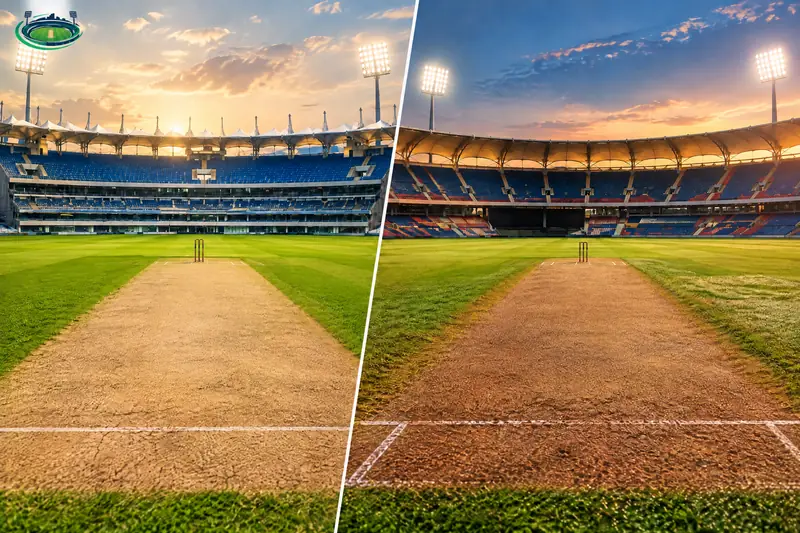
JSCA International Stadium Complex Pitch Report vs Ekana: Batting or Bowling Pitch?
The JSCA International Stadium Complex pitch report is important for the India vs West Indies 2nd T20I in Ranchi on October 9, 2026. After India's victory in the opening T20I at Lucknow's Ekana Cricket Stadium, attention now turns to whether Ranchi will offer a better batting surface or another challenging contest between bat and ball.
Unlike Ekana, where the surface can be slow and low, JSCA has traditionally offered batters opportunities to score early before the pitch may become more helpful for spinners and bowlers using variations. However, the actual behaviour will depend on the match-day surface, weather and dew.
JSCA International Complex Stadium Batting or Bowling Pitch?
Pitch verdict: Balanced, with batting opportunities early and potential assistance for spinners later.
The JSCA Cricket Stadium Ranchi pitch is not automatically a bowling wicket or a flat batting track. Batters can score freely when the ball comes onto the bat, particularly during the powerplay. As the innings progresses, a dry surface may offer grip and make stroke-making more difficult.
For the India vs West Indies T20I, the key question is whether the pitch remains consistent throughout the match or slows down during the middle overs.
| Pitch factor | What it means for the match |
|---|---|
| Powerplay | Batters can take advantage of the fielding restrictions if the ball comes onto the bat |
| Middle overs | Spinners and slower-ball bowlers could become more influential |
| Death overs | Batters may need to adjust their shots if the surface becomes slower |
| Dew factor | Heavy dew could make the ball slippery and help the team batting second |
| Toss decision | Batting first can be attractive, but dew may favour chasing |
The pitch should therefore be treated as a balanced T20 surface rather than a guaranteed high-scoring or low-scoring wicket.
JSCA International Stadium Complex Pitch Report: T20I Records
The historical T20I numbers provide useful context for understanding the Ranchi surface.
| T20I record | JSCA Stadium, Ranchi |
|---|---|
| Average first-innings score | Around 161 |
| Highest team total | 196/6 by India vs Sri Lanka |
| Lowest total listed in a completed innings record | Australia 118/8 vs India |
| Competitive first-innings target | Around 160â180 |
These figures are historical venue statistics, not predictions of the score in today's match. India's previous total of 196/6 also shows that the ground can support an aggressive batting performance. A score above 200 is not something to rule out, although it would require the batting side to capitalise on the conditions.
The historical average second-innings score has been lower than the first-innings average in published venue reporting, which supports considering batting first. However, a limited number of T20Is means these records should not be treated as a guarantee.
JSCA vs Ekana Stadium Pitch Report: Which Pitch Is Better for Batting?
The difference between Ranchi and Lucknow is particularly relevant because India and West Indies have just played their first T20I at Ekana. For another venue comparison, read our Ekana pitch report against Mullanpur.
| Pitch characteristic | JSCA International Stadium Complex, Ranchi | Ekana Cricket Stadium, Lucknow |
|---|---|---|
| General pitch behaviour | Can offer early batting opportunities before assisting spin | Often described as slow and low |
| Batting approach | Start positively, then adapt if the ball grips | Timing and shot selection are important on a slower surface |
| Spin bowling | May become influential as the innings progresses | Grip and turn can make spinners important |
| Boundaries and scoring | A competitive total depends on the pace of the pitch and conditions | Larger boundaries can make clearing the ropes more demanding |
| Batting-first strategy | Attractive if the pitch is expected to slow down | Historical T20I results have often favoured the side batting first |
| Chasing conditions | Dew could make a difference in the second innings | Dew may make chasing easier, despite the historical batting-first trend |
Which stadium is better for batters?
Neither venue is automatically better in every match. Ranchi could offer better scoring opportunities if the surface is firm and the ball comes onto the bat. Ekana can be more challenging when the pitch is slow and the boundaries make six-hitting difficult.
For bowlers, both venues can reward changes of pace and spin. The decisive factor is how much grip the surface offers on the day.
Ekana Stadium T20I Records: What Can Ranchi Learn?
Ekana's historical T20I record provides a useful comparison. Before the current series, the venue had hosted a limited number of men's T20Is, and the team batting first had won five of six matches in one published historical tally.
India also produced a strong total of 195/2 against West Indies at Lucknow in November 2018, showing that Ekana is not always a low-scoring ground.
For the current series, three lessons matter:
- Batting first can work at Ekana: Historical results show that setting a target has often been successful there.
- The pitch can still allow big scores: India's 195/2 demonstrates that the venue's reputation for slower conditions does not prevent aggressive batting.
- Ranchi has its own record: JSCA's historical average and highest total should be assessed separately rather than assuming that the Ekana pattern will automatically repeat.
Venue records are useful indicators, but the outcome of one match cannot establish a permanent pitch pattern.
India vs West Indies 2nd T20I: If India Bats First
If India win the toss and choose to bat, their priority should be to build a strong powerplay without losing too many wickets.
India have explosive batting options, but the key will be adjusting to Ranchi if the pitch slows down. Attacking every delivery could become risky if spinners find grip in the middle overs.
What could happen?
- India may look to score quickly during the powerplay.
- The middle order may need to rotate the strike against spin instead of relying only on boundaries.
- A total in the 160â180 range would provide a useful historical benchmark, although the actual par score will depend on the surface.
- If the pitch slows down significantly, a well-defended total could put West Indies under pressure.
A total near or above 180 would give India a stronger platform, but it would not guarantee victory if dew makes batting easier later.
India vs West Indies 2nd T20I: If West Indies Bats First
West Indies possess powerful hitters who can change a T20 match quickly. If they bat first, India's bowling attack will need to control the powerplay and avoid allowing the opposition to build momentum.
On a surface offering grip, India's spinners and slower-ball options could be particularly valuable in the middle overs.
What could happen?
- West Indies may attempt to attack early before the pitch becomes slower.
- India could use spin and variations to restrict scoring in the middle overs.
- If West Indies post a total around 160â180, the match could remain competitive.
- If dew develops later, India's chase could become easier because the ball may be harder for bowlers to grip.
West Indies should not assume that Ranchi will behave exactly like Ekana. A good start and wickets in hand could allow them to score above the historical venue average.
Will History Repeat at JSCA After the Ekana T20I?
India's opening-match victory at Ekana gives them momentum, but it does not mean the same result is inevitable in Ranchi.
Ekana's slow surface and Ranchi's potentially different pitch characteristics create a fresh contest. If JSCA offers early batting conditions followed by greater assistance for spin, the team that adapts best in the middle overs could gain an advantage.
The toss could influence the decision, particularly if dew is expected. A captain might prefer chasing under heavy dew, while a surface likely to slow down could make setting a target more attractive.
PitchVaani's assessment: India have a strong opportunity if their batters adapt to the conditions and their bowlers control the middle overs. West Indies can challenge them if their power hitters establish a strong platform and their bowlers take early wickets.
The most important question is not simply whether Ranchi is a batting or bowling pitch. It is whether the surface stays true throughout the match or becomes slower as the innings progresses.
Final Verdict: JSCA vs Ekana Pitch Report
The JSCA International Stadium Complex in Ranchi offers a potentially balanced contest, with scope for early batting and greater assistance for spin later. Ekana, by comparison, is often associated with slower conditions and larger boundaries, although its historical T20I record shows that substantial totals are possible.
For the India vs West Indies 2nd T20I, the likely winning approach is to assess the surface carefully, preserve wickets for the closing overs and account for dew before making a final judgement on the toss.
PitchVaani note: The pitch assessment is based on historical venue characteristics and published records. The exact match-day pitch behaviour, dew intensity and competitive total cannot be confirmed until conditions are observed.