

West Indies exposed a serious concern in India’s T20 setup: the bowling attack is putting too much pressure on the batting lineup to deliver exceptional performances. In Hyderabad on 14 October 2026, India conceded 247/3 before finishing on 223, losing the fourth T20I by 24 runs. Shai Hope’s unbeaten 102 was central to West Indies’ total, but the bigger story was the contrast between the two bowling attacks. India struggled to contain the scoring, while West Indies found crucial wickets and successfully defended their total. 1
India’s batters deserve scrutiny too. Chasing 248 was always a demanding task, and scoring 223 showed that the batting lineup kept fighting. But a team cannot consistently rely on its batters to compensate for expensive bowling performances. The bigger question is whether India can control high-scoring T20 matches when their bowlers fail to create pressure or take wickets at crucial moments.
The Numbers Behind India’s Bowling Problem
A target India couldn’t reach
248West Indies made 247/3. India finished on 223, losing by 24 runs.
Two costly pace spells
104 runsArshdeep and Mayank conceded 52 each in four overs: 13 runs per over combined.
How West Indies Turned India’s Chase Around
7 wickets in 6 oversKeemo Paul and Gudakesh Motie took seven wickets for 54 runs in six overs, putting India’s chase of 248 under intense pressure. Paul claimed five wickets, while Motie took two, helping West Indies secure a 24-run victory in Hyderabad.
Arshdeep Singh’s Fitness and Selection Status
Availability to be confirmedBhuvneshwar Kumar was reportedly added as cover on 16 October amid concerns over Arshdeep Singh’s fitness. Arshdeep’s availability for the fifth T20I depends on his recovery and the team’s selection decision.
The Hyderabad scorecard gives the criticism a clear basis. Mayank Yadav and Arshdeep Singh conceded 52 runs each, while Naman Dhir’s only over cost 19. India used six bowlers, but finished with just three wickets. More options didn’t produce enough control. 1
India’s Bowling Figures: Fourth T20I, Hyderabad
Mayank Yadav
0/524 overs · Economy 13.00
Arshdeep Singh
1/524 overs · Economy 13.00
Prince Yadav
1/364 overs · Economy 9.00
Axar Patel
1/454 overs · Economy 11.25
Naman Dhir
0/191 overs · Economy 19.00
Nitish Kumar Reddy
0/393 overs · Economy 13.00
Fourth T20I only, 14 October 2026. The bowlers’ runs total 243; the remaining four runs were leg-byes. Economy rates use runs charged to each bowler.
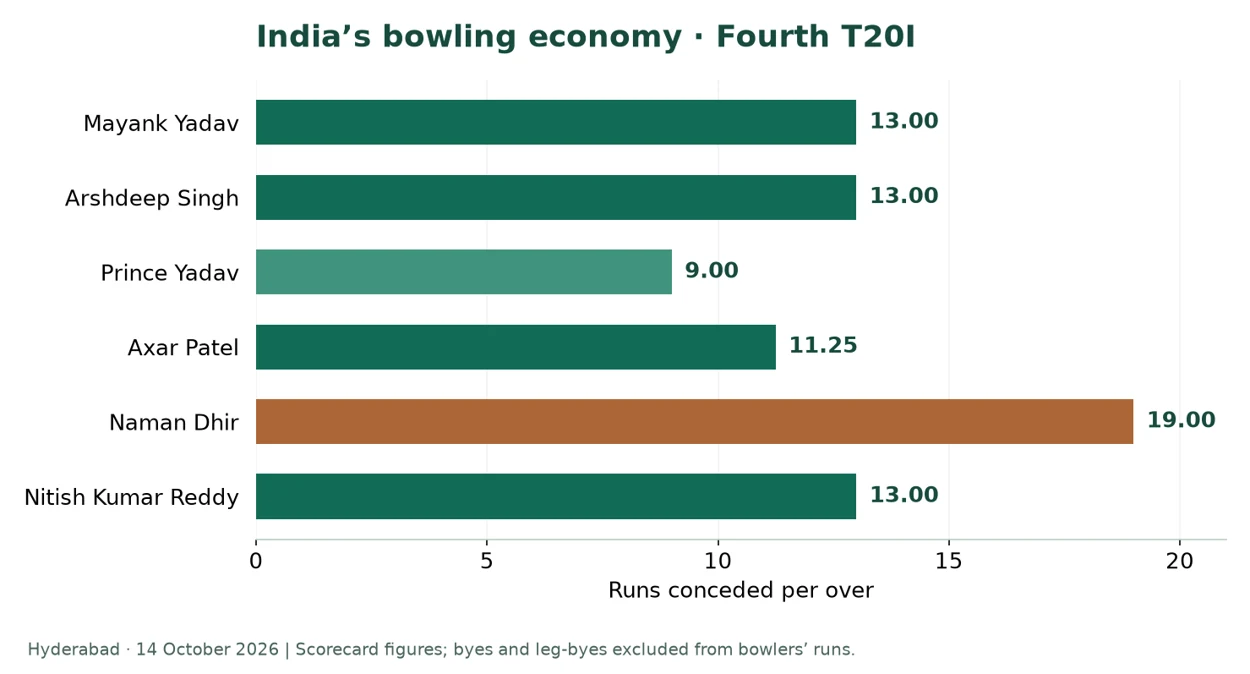
Arshdeep Singh and Mayank Yadav conceded 104 runs in eight overs combined, at an economy rate of 13 runs per over. Naman Dhir and Nitish Kumar Reddy gave away 58 runs in four overs, conceding 14.50 per over. These are figures from one match, not career judgments, but they help explain why India faced a target of 248.
Prince Yadav provided a measure of control. His 1/36 from four overs was the most economical full four-over spell among India’s bowlers. While West Indies scored at 12.35 runs per over overall, Prince conceded nine per over. His figures show that scoring could be restricted, even on a high-scoring night. 1
India also found a better passage through the middle overs. The match report noted reverse movement and effective wide yorkers that slowed West Indies’ scoring. However, the visitors still scored 62 runs in the final four overs. Not every delivery was poor; the concern was that India’s periods of control did not last long enough to keep the total within easier reach. 2
Hyderabad Pitch: Batting-Friendly, but Not Without Help for Bowlers
Hyderabad produced 470 runs across the two innings, showing how effectively both teams scored. Sanju Samson made 56 off 23 balls, Shai Hope remained unbeaten on 102 off 50, and Sherfane Rutherford finished 49 not out off 26. The scoring showed that batters could play aggressively and build substantial totals. 1
However, the match was not simply a case of a completely flat pitch. The match report described a dry, relaid surface that offered some assistance to bowlers, with no dew reported. India captain Shreyas Iyer also said the ball held in the surface, while West Indies made effective use of the bounce and their field placements. 2
How West Indies Made the Conditions Count
7 wickets for 54 runs in 6 overs
Keemo Paul took 5/41 in four overs, while Gudakesh Motie returned 2/13 in two. Together, they claimed seven wickets while conceding 54 runs. Their spells showed how disciplined bowling and timely breakthroughs could put pressure on India’s chase, even in a high-scoring match. 1
What the Match Tells Us About the Pitch
The evidence points to a surface that allowed aggressive batting but still offered opportunities for bowlers who varied their pace, used the bounce and executed their plans. The difference was not simply whether the pitch favoured batting or bowling; it was how effectively each side adapted to the conditions.
For India, the challenge was to sustain bowling control for longer and prevent West Indies from finishing with such a high total. The match illustrates why pitch conditions matter, but bowling execution and pressure at key moments matter too.
How West Indies Outbowled India Under Pressure
Paul Adapted When His First Plan Wasn’t Working
Keemo Paul’s approach was built around execution and variation. In his post-match interview, he explained that West Indies aimed to bowl yorkers and, when that approach was less effective, tried bowling into the pitch. He also noted that the slower balls were gripping and stressed the importance of avoiding predictable patterns. 3
Timely Wickets Disrupted India’s Chase
Paul dismissed Sanju Samson and Ishan Kishan in the fifth over, interrupting India’s early momentum. Later, Gudakesh Motie dismissed Abhishek Sharma and Naman Dhir on consecutive deliveries in the 12th over. These breakthroughs forced India to rebuild instead of maintaining the scoring rate required to chase 248. West Indies also backed their bowlers with effective fielding. 1
India Needed More Consistent Support Across the Attack
India did produce some effective yorkers during the first innings, so the problem was not a complete lack of planning. The bigger issue was sustaining pressure when West Indies attacked and finding alternative ways to restrict the scoring when the initial plan failed.
Naman Dhir and Nitish Kumar Reddy conceded 58 runs across four overs without taking a wicket. That made their overs costly in this particular match. It does not, by itself, establish that either player is unsuitable as a bowling option, but it raises a fair question about how India can balance part-time overs with dependable specialist bowling.
What India Can Learn from the Defeat
West Indies showed the value of changing lengths, using slower balls when conditions allowed and taking wickets at key moments. India’s challenge is to build the same flexibility across its bowling attack, so that when one option is expensive, another can regain control before the opposition sets an overwhelming target.
Where India’s Batting Lost Momentum
India reached 80/2 after six overs, marginally ahead of West Indies’ powerplay score of 79/1. The opening phase showed that India could score quickly against the target of 248. The bigger challenge was maintaining that momentum once West Indies adjusted their bowling plans. 1
The Middle Overs Needed More Intent
Abhishek Sharma scored 29 off 24 balls, while Shreyas Iyer made 16 off 11. Neither innings sustained the scoring rate India needed for such a demanding chase. West Indies varied their pace and lengths, and Gudakesh Motie’s two wickets in consecutive deliveries left India at 130/5, increasing the pressure on the middle and lower order. 1
Tilak and Nitish Revived the Chase
Tilak Varma’s 43 off 25 balls and Nitish Kumar Reddy’s 41 off 20 gave India renewed hope. Their sixth-wicket partnership added 70 runs. During that recovery, India reduced the equation to 59 needed from the final 24 balls. However, Romario Shepherd dismissed Tilak in the 17th over, and Keemo Paul struck three times in the 19th, ending India’s chance of a late surge. 1
The Lesson: Adapt When the Bowling Plan Changes
India’s batting challenge was not simply about scoring more boundaries. Against a changing mix of pace and length, the batters needed to keep rotating the strike, find scoring options away from protected boundary areas and avoid allowing the required rate to climb during the middle overs.
Chasing 248 was always a demanding task. But the early start and the sixth-wicket recovery showed that India had scoring opportunities. The missed opportunity was failing to sustain that progress between those two phases.
Ranchi Was an Earlier Warning for India’s Bowling Attack
India’s defeat in Ranchi on 9 October 2026 raised a similar concern about its ability to control a high-scoring T20 match. India posted 249/5, but West Indies chased down the target of 250 in just 18.3 overs, finishing at 252/4 with nine balls to spare. India took two wickets in the first over and three during the powerplay, but couldn’t maintain that pressure as the chase progressed. 4
Mayank Yadav’s Spell Offered a Positive
Mayank Yadav took 3/36 in three overs in Ranchi, providing an important individual contribution despite India’s defeat. His performance also contrasts with his 0/52 in four overs in Hyderabad. The difference underlines why individual spells need to be assessed match by match, rather than using one expensive outing to judge a bowler’s overall ability. 5
Different Conditions, a Similar Challenge
Ranchi and Hyderabad presented different conditions. The Ranchi match report and coach Gautam Gambhir’s comments described a flat surface and dew. Even so, India’s bowlers had opportunities to make an impact: Roston Chase took 3/24 in four overs during India’s innings, showing that disciplined bowling could still produce results in a high-scoring contest. 4
The Common Thread: Sustaining Pressure
The two defeats exposed different problems. In Ranchi, India failed to defend a total of 249; in Hyderabad, its bowlers conceded 247/3 before the batting side fell short.
The shared concern is not that India lacks good individual performances. It is whether the team can sustain pressure across all phases of a T20 match, rather than relying on early wickets or brief periods of control.
Injuries, Rest and Selection: What Is Actually Confirmed?
A confirmed injury concern
Arshdeep SinghBCCI’s 16 October advisory says a blow to his bowling shoulder. A final participation decision is still pending.
Squad cover, not a playing XI
Bhuvneshwar KumarAdded to the Bengaluru squad. The advisory does not confirm which bowlers will play.
The latest update is BCCI’s 16 October advisory. Arshdeep sustained a blow to his bowling shoulder in Hyderabad, and Bhuvneshwar Kumar has been added to the squad for the Bengaluru decider. BCCI says Arshdeep’s participation will be decided before the game based on his recovery. The addition is cover, not a confirmed playing-XI announcement or a definitive rule-out for Arshdeep. 6
Hardik Pandya’s absence has a different background. In September, Gambhir’s comments linked his omission to quadriceps rehabilitation and said India didn’t want to rush him back. That is reported context for his absence, not a new October medical clearance. 7
Bumrah wasn’t named in the announced West Indies T20I squad. Kuldeep Yadav was in the squad but outside Hyderabad’s XI; his absence from that match should be treated as selection, not an injury claim. 8
Those distinctions matter when discussing bowling depth. An injury can reduce the captain’s options. A player left out of the XI is a different decision. Neither makes the 247/3 total disappear, but both affect what India can change for the next game.
What Needs to Change Before the Bengaluru Decider?
The India vs West Indies fifth T20I on 17 October 2026 needs more than another promise of aggressive batting. India need clear bowling responsibilities: who can take a wicket with the new ball, who can reduce scoring through the middle, and who can finish an over when a batter is already set. 6
Archival photographs illustrate these tactical priorities; they are not images from the October 2026 matches.
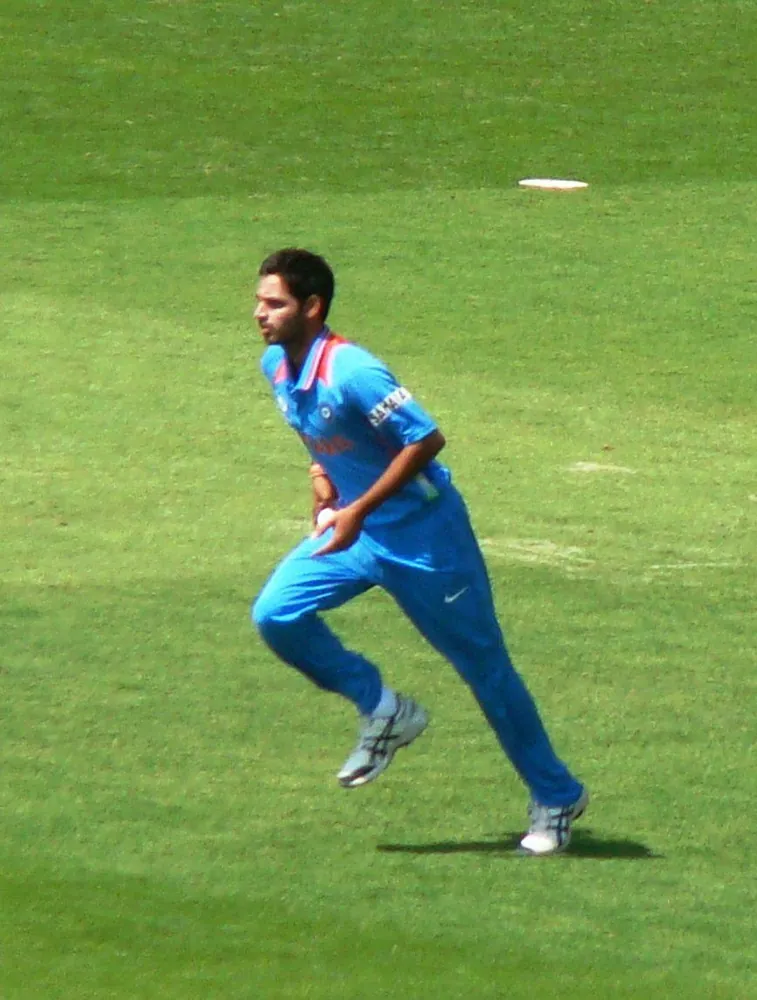
1. New-Ball Impact
BowlingThe priority: Early wickets without easy runs.
Set clear lines and lengths, use attacking fields when appropriate and avoid predictable deliveries after boundaries.
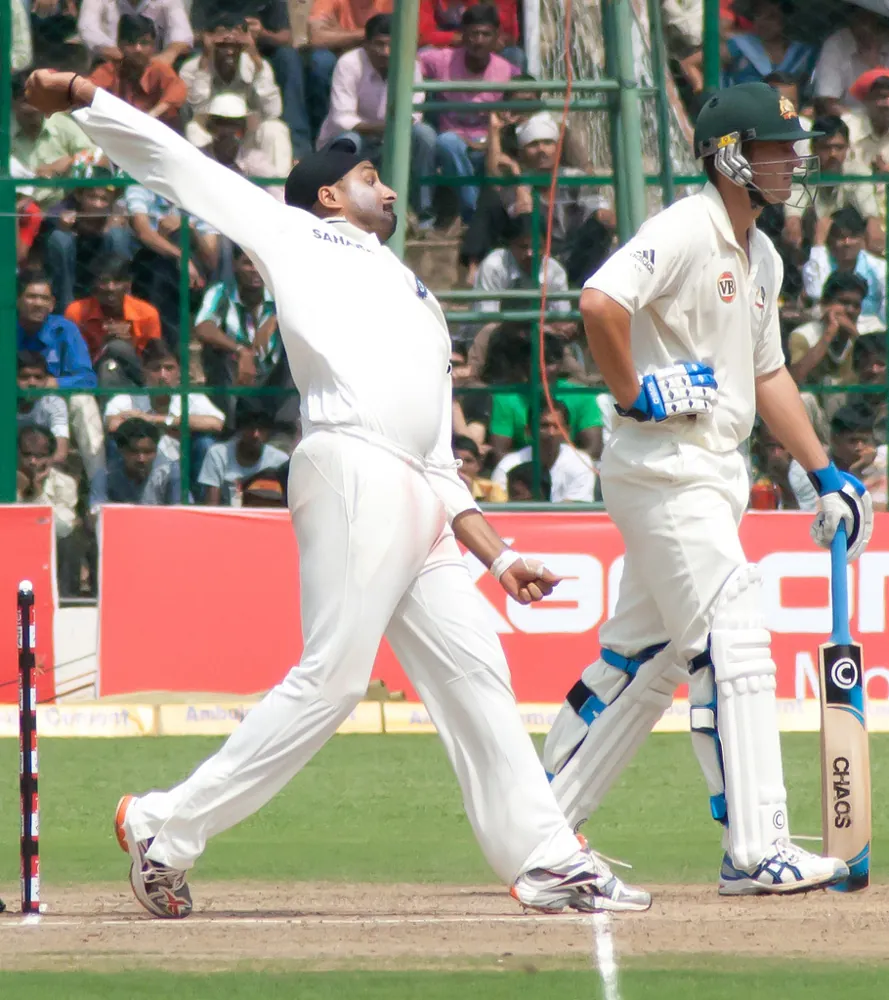
2. Middle-Over Control
BowlingThe priority: Break partnerships.
Vary pace and length, assess batter match-ups and protect the boundary areas the batter targets most.
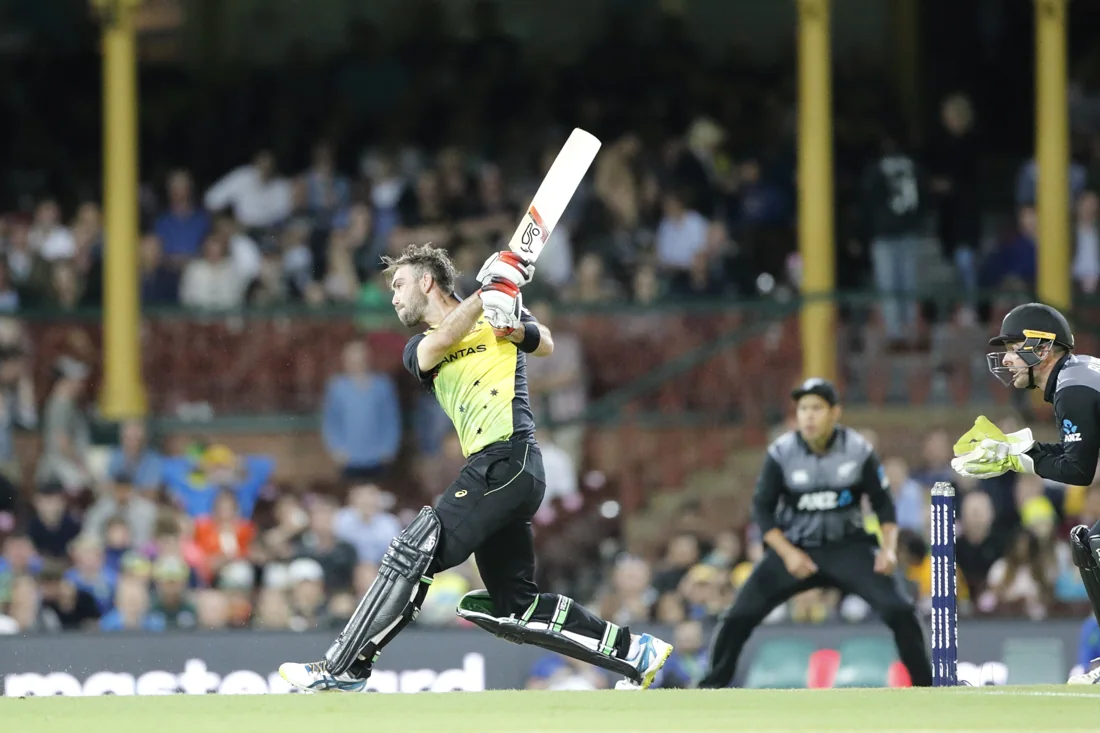
3. Death-Over Execution
BowlingThe priority: Limit late scoring.
Prepare yorkers, slower balls and backup lengths. Change the plan when a set batter begins reading the delivery.
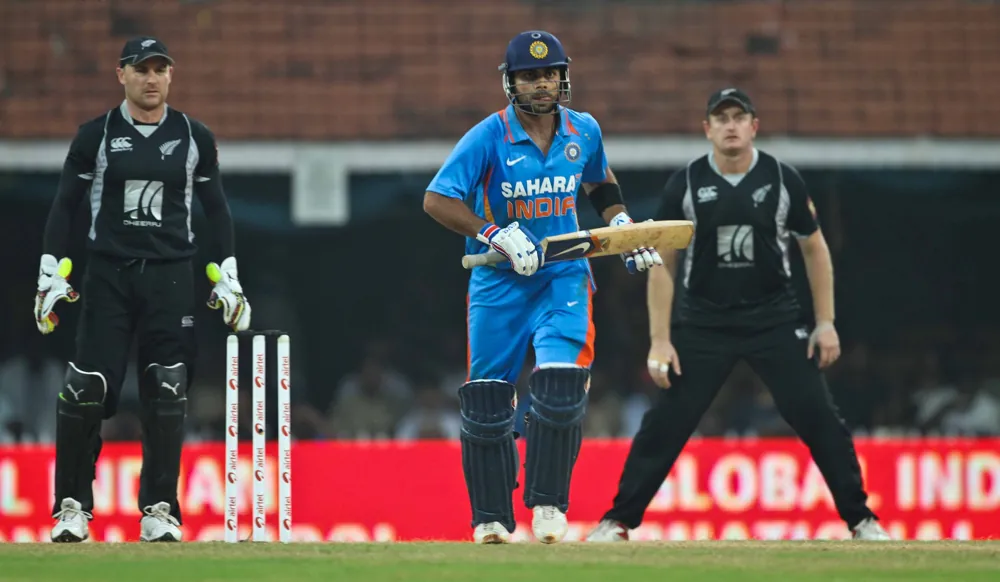
4. Batting Adaptability
BattingThe priority: Keep the chase moving.
Rotate the strike, read the field and adjust shot selection when bowlers change pace or the ball grips.
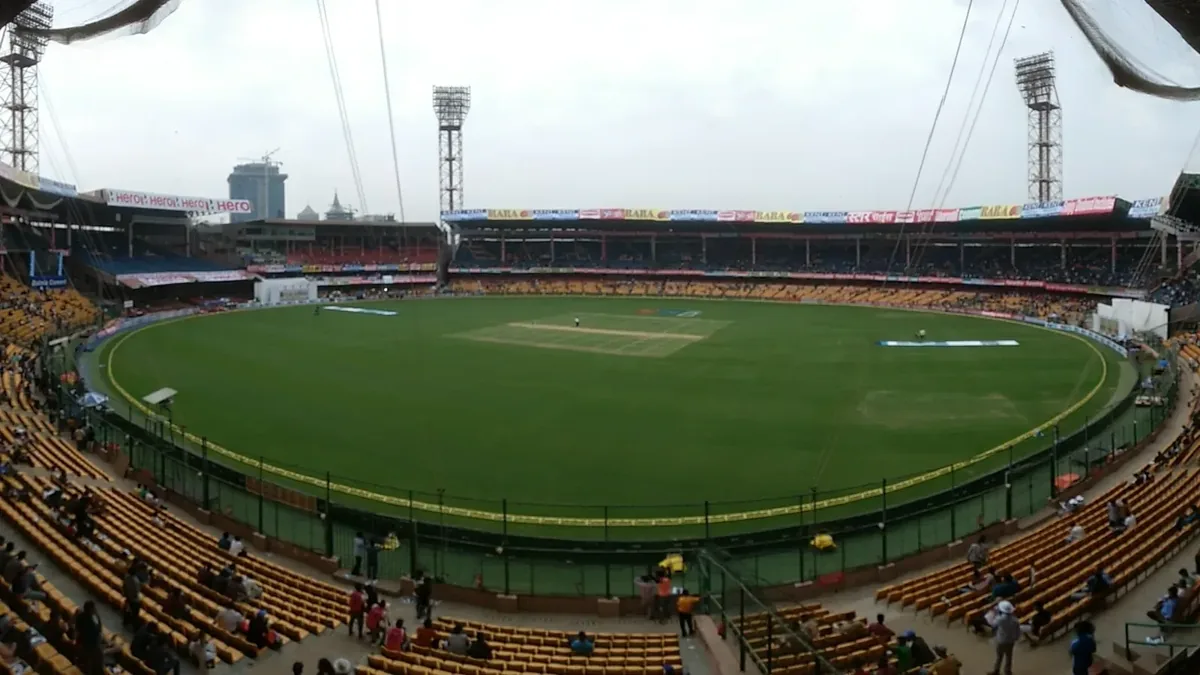
5. Team Balance
SelectionThe priority: Give every player a defined role.
Balance specialist bowlers and batting depth. Treat part-time overs as a planned option, not an automatic solution.
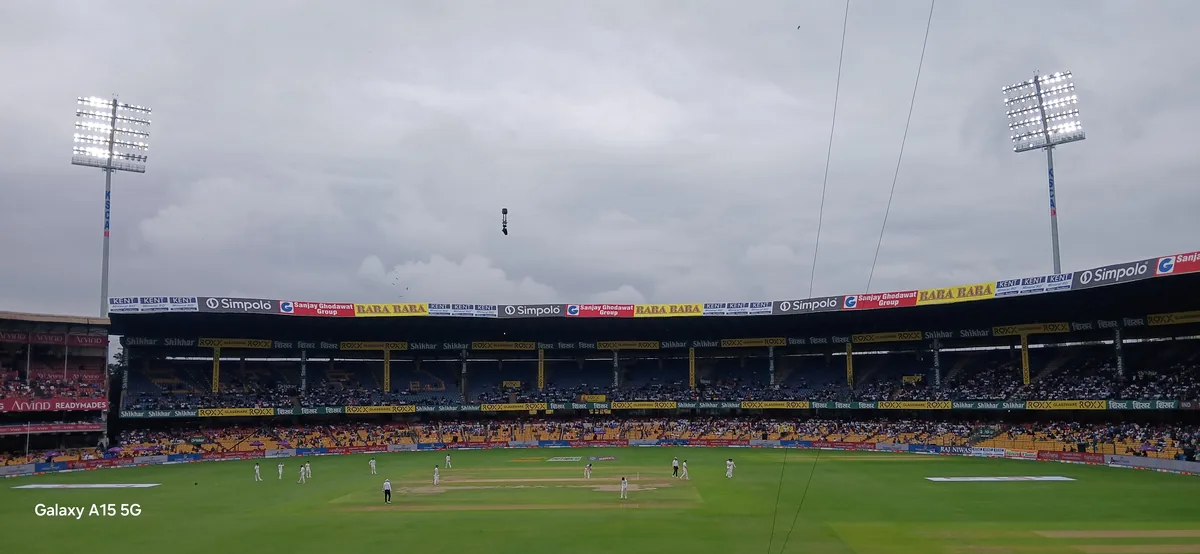
6. Bengaluru Conditions
Match preparationThe priority: Assess the actual conditions.
Check the selected pitch, weather and possible dew before deciding bowling combinations and batting tactics.
Photo credits and archive context
These are archival cricket and stadium photographs illustrating tactical priorities, not pictures from the October 2026 matches or a predicted playing XI.
- Dee03 · CC BY-SA 3.0. Proportionally resized and converted to WebP; CSS frame crops for display only.
- Pulkit Sinha · CC BY-SA 2.0. Proportionally resized and converted to WebP; CSS frame crops for display only.
- lensbug.chandru · CC BY 2.0. Proportionally resized and converted to WebP; CSS frame crops for display only.
- David Molloy Photography · CC BY 2.0. Existing proportionally compressed WebP; CSS frame crops for display only.
- Aniket Suryavanshi · CC BY 2.0. Existing proportionally compressed WebP; CSS frame crops for display only.
- Raghavan2010 · CC0 1.0. Existing proportionally compressed WebP; CSS frame crops for display only.
Adding another attacking batter may help the scoring, but it won’t automatically solve the overs being conceded. Equally, choosing another specialist bowler isn’t a guaranteed fix. The selection needs to match an actual role and a method that can be executed under pressure.
For venue context, read PitchVaani’s M. Chinnaswamy Stadium pitch report. Bengaluru’s historical scoring figures describe that ground; they don’t establish how the next strip will behave. Keep the latest match-day weather forecast separate from observations at the toss.
PitchVaani Perspective
India’s biggest concern is no longer just how many runs the opposition scores, but how difficult it is to stop the momentum once a batting side takes control. Conceding 247/3 in Hyderabad and failing to defend 249/5 in Ranchi have exposed questions about India’s bowling discipline, ability to break partnerships and options under pressure.
West Indies, meanwhile, have shown that India can be challenged even when the contest becomes a battle of execution. India’s batters must also find ways to keep a chase alive when boundaries stop coming regularly. Aggressive starts matter, but adaptability matters just as much.
The real test for India is whether they can interrupt West Indies’ scoring rhythm and respond intelligently when their own first plan stops working. Bengaluru provides the next opportunity to show that improvement. The fifth T20I will reveal more about India’s response than any pre-match assumption can.
For the Hyderabad result and match details, read the fourth-T20I fixtures and results. For coverage of the upcoming game, explore the fifth-T20I related blogs.
Frequently Asked Questions
What T20 weakness did West Indies expose in India’s team?
The results highlighted inconsistent scoring control from India’s current attack. India conceded 247/3 in Hyderabad and had earlier failed to defend 249/5 in Ranchi. These examples support criticism of the performances, not a permanent judgment on every Indian bowler.
Was Hyderabad’s pitch unplayable in the fourth T20I?
No. The two innings produced 470 runs. Reports describe a dry surface with some grip and bowling assistance; Keemo Paul’s 5/41 and Gudakesh Motie’s 2/13 show that bowlers could influence the match.
Which Indian bowlers conceded the most runs in Hyderabad?
Mayank Yadav and Arshdeep Singh conceded 52 each in four overs. Naman Dhir had the highest economy rate, conceding 19 in one over. Prince Yadav’s 1/36 was India’s least expensive full four-over spell.
Is Arshdeep Singh ruled out of the fifth T20I?
BCCI’s 16 October advisory does not definitively rule him out. It says his participation will be decided before the game based on recovery after a blow to his bowling shoulder. Bhuvneshwar Kumar has been added to the squad as cover.
Would selecting Kuldeep or another batter guarantee a better result?
No selection guarantees a win. India need a balanced XI with defined bowling roles and a batting plan that responds to the conditions. Kuldeep was outside the fourth-T20I XI, but his selection for the decider was not confirmed by the advisory.
References and match sources
- Completed fourth-T20I scorecard: Hyderabad, 14 October 2026
- Cricinfo match report: Hope century and Paul five-for in Hyderabad
- Cricbuzz fourth-T20I commentary and post-match interviews
- Second-T20I scorecard: Ranchi, 9 October 2026
- Gambhir’s post-Ranchi comments on conditions and bowling execution
- BCCI media advisory: Arshdeep and Bhuvneshwar, 16 October 2026
- Gambhir’s reported September explanation of Hardik’s rehabilitation
- BCCI’s original West Indies squad announcement
- Fourth-T20I playing XI and bench

More PitchVaani Match Analysis

Hyderabad fourth-T20I results
Match result, winning margin and standout performances from Hyderabad.
Read on PitchVaani →Bengaluru pitch report
Historical scoring trends, bowling evidence and match-day pitch factors.
Read on PitchVaani →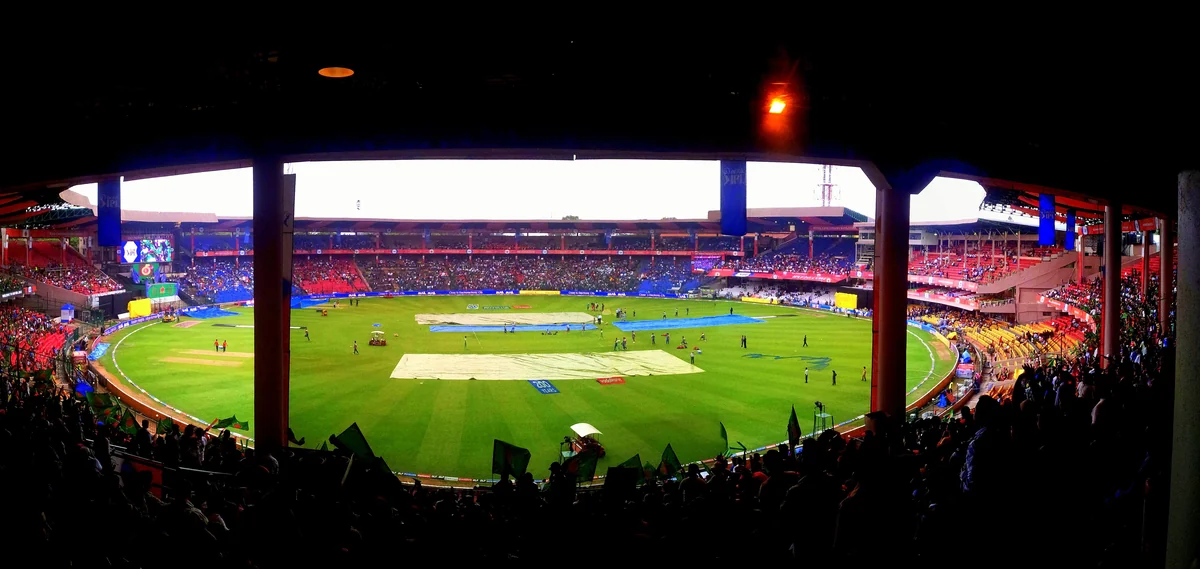
Fifth-T20I related blogs
Explore PitchVaani’s Bengaluru match and stadium guides in one place.
Read on PitchVaani →Fifth-T20I weather forecast
Read the dated rain forecast and the conditions to monitor before travelling.
Read on PitchVaani →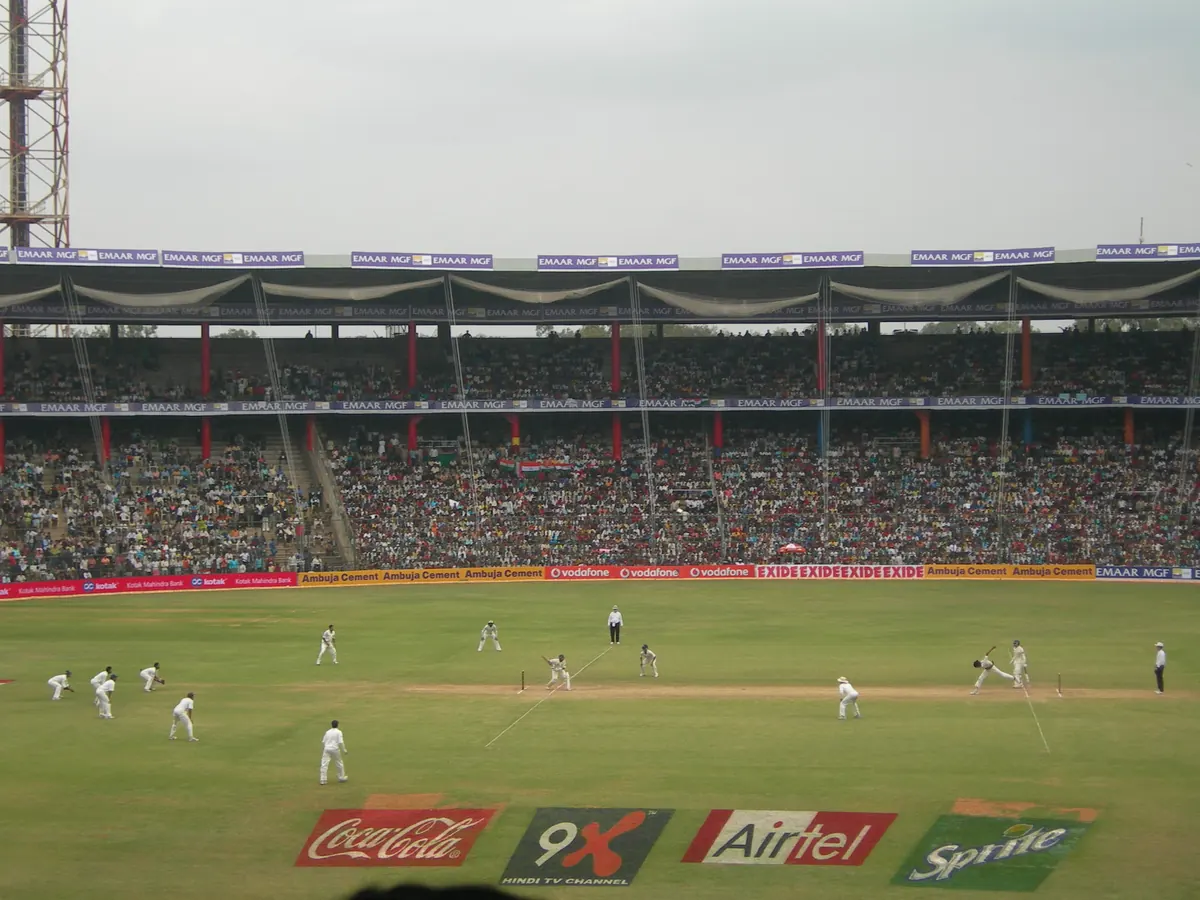
Chinnaswamy seating arrangement
Understand your stand, ticket fields and complete E-numbered and G-numbered gate labels.
Read on PitchVaani →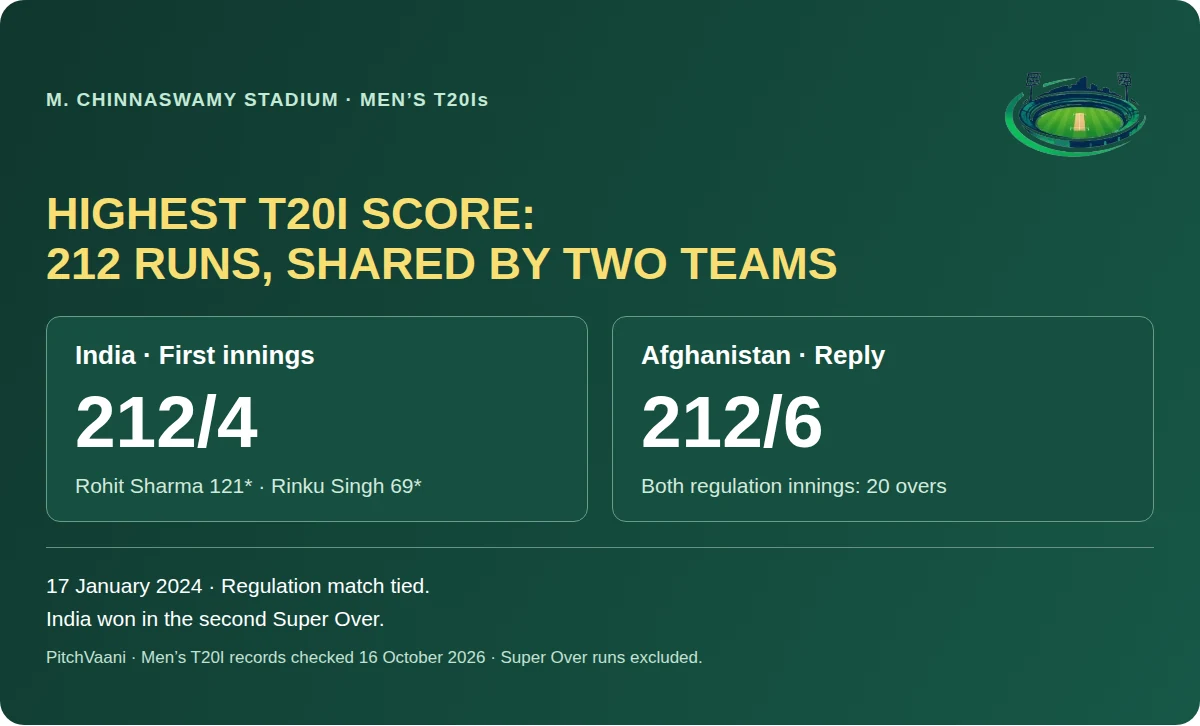
Highest T20I scores at Chinnaswamy
Compare men’s T20I team totals and read the record-match analysis.
Read on PitchVaani →Card image credits
Archival photographs are not images of the October 2026 matches or the current weather. Stadium-wide photograph: Aniket Suryavanshi, CC BY 2.0. 2024 ground photograph: Raghavan2010, CC0 1.0. 2007 match photograph: Amarnath.de, public domain. Night-match photograph: Ashwin Kumar, CC BY-SA 2.0. Other images reuse PitchVaani’s existing published cover graphics.


