
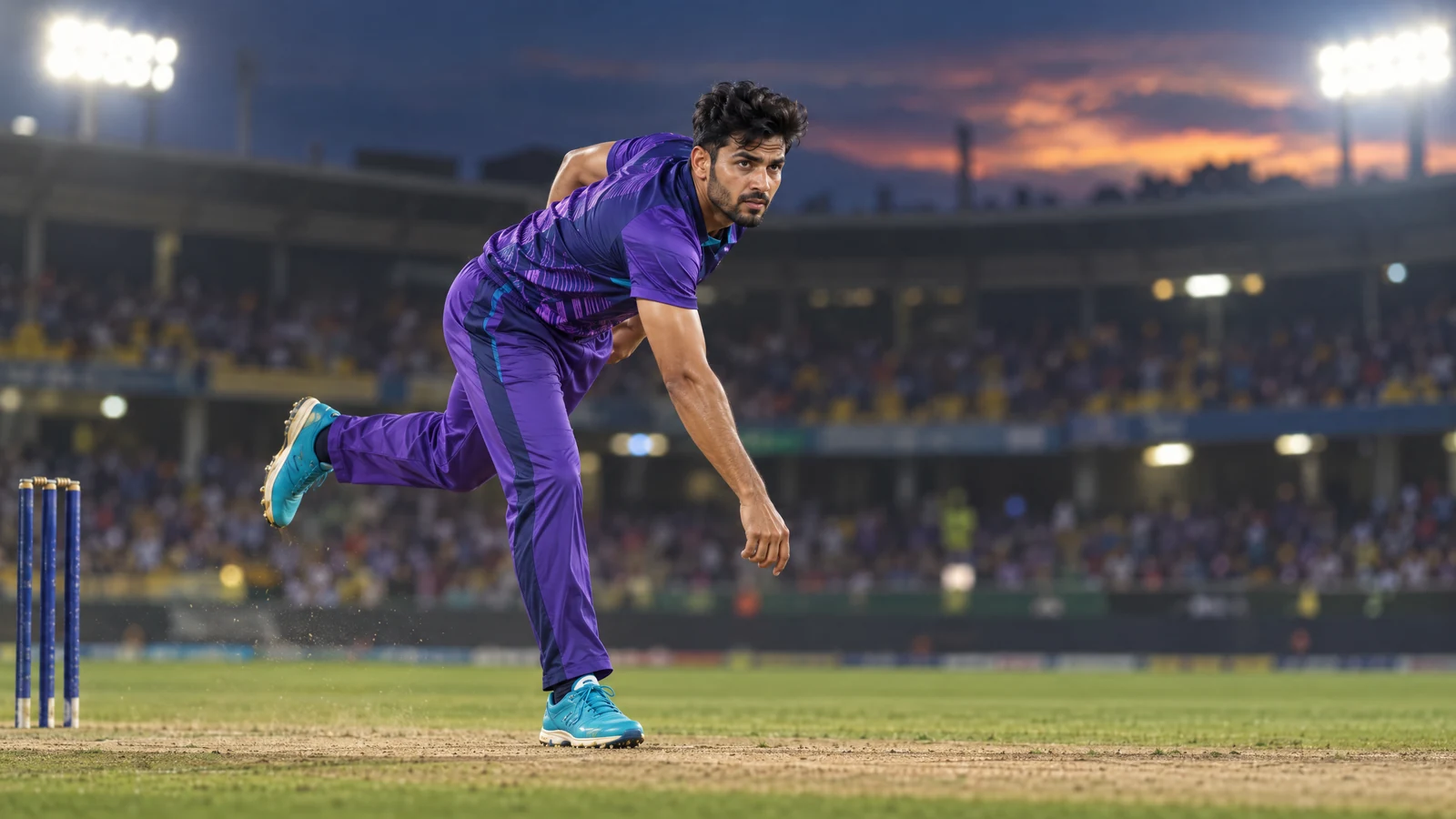
The Syed Mushtaq Ali Trophy 2026–27 has produced several impressive bowling performances since the tournament began on 14 November. Mayank Yadav made the biggest impact on the opening day, taking five wickets for Delhi against Jammu & Kashmir. Sultan Karim, Abhilash Shetty, Sayan Ghosh and Saurabh Dubey also picked up four-wicket hauls.
In T20 cricket, however, taking wickets is only one part of a bowler's job. The ability to control scoring in the final five overs can be equally important. Death-over bowling requires accuracy, variations, slower deliveries and the ability to defend runs under pressure.
This article looks at the leading bowling performances in SMAT 2026–27, compares their figures and explains what to check before identifying the tournament's best death-over bowlers.
Data note: The complete bowling leaderboard below is an opening-round snapshot based on matches played on 14 November 2026. It is not a final tournament ranking. Death-over figures are not included because verified over-by-over data was not available for every bowler.
SMAT 2026–27: Top Bowling Performances
The opening day produced one five-wicket haul and several four-wicket performances. Mayank Yadav finished with the best figures, taking 5/14 in three overs against Jammu & Kashmir.
| Rank | Bowler | Team | Overs | Runs | Wickets | Economy |
|---|---|---|---|---|---|---|
| 1 | Mayank Yadav | Delhi | 3 | 14 | 5 | 4.67 |
| 2 | Sultan Karim | Manipur | 4 | 14 | 4 | 3.50 |
| 3 | Abhilash Shetty | Karnataka | 4 | 26 | 4 | 6.50 |
| 4 | Sayan Ghosh | Bengal | 4 | 28 | 4 | 7.00 |
| 5 | Saurabh Dubey | Vidarbha | 4 | 30 | 4 | 7.50 |
| 6 | Arzan Nagwaswalla | Gujarat | 4 | 50 | 4 | 12.50 |
| 7 | KV Sasikanth | Andhra | 2.2 | 12 | 3 | 5.14 |
| 8 | Badal Rawat | Puducherry | 4 | 12 | 3 | 3.00 |
| 9 | Pratyush Kumar | Jharkhand | 3.2 | 13 | 3 | 3.90 |
| 10 | L Kishan Singha | Manipur | 4 | 13 | 3 | 3.25 |
Source: Opening-day match scorecards, 14 November 2026. Economy is calculated as runs conceded per over. Bowling figures are overall innings figures, not death-over figures.
1. Mayank Yadav – Delhi
Bowling figures: 5/14 in 3 overs
Mayank Yadav delivered the standout bowling performance of the opening day. He took five wickets for just 14 runs in three overs against Jammu & Kashmir.
Delhi had scored 243/6 before dismissing Jammu & Kashmir for 140 in 19.1 overs. Mayank's five-wicket haul helped Delhi secure a 103-run victory.
| Metric | Performance |
|---|---|
| Overs | 3 |
| Runs conceded | 14 |
| Wickets | 5 |
| Economy | 4.67 |
| Bowling average | 2.80 |
| Bowling strike rate | 3.60 balls per wicket |
His figures make him the leading wicket-taker in the opening-round snapshot. His pace makes him an interesting bowler to follow as the tournament progresses.
Death-over question: His overall figures alone do not establish how effectively he bowled in overs 16–20. That requires the innings over-by-over scorecard.
2. Sultan Karim – Manipur
Bowling figures: 4/14 in 4 overs
Sultan Karim was one of the most economical bowlers on the opening day. He took four wickets while conceding only 14 runs in his full quota of four overs against Arunachal Pradesh.
| Metric | Performance |
|---|---|
| Overs | 4 |
| Runs conceded | 14 |
| Wickets | 4 |
| Economy | 3.50 |
| Bowling average | 3.50 |
| Bowling strike rate | 6 balls per wicket |
An economy rate of 3.50 is an excellent return in a T20 innings. His performance demonstrates the value of controlling runs while taking wickets.
3. Abhilash Shetty – Karnataka
Bowling figures: 4/26 in 4 overs
Abhilash Shetty took four wickets against Bengal as Karnataka defended a total of 184.
| Metric | Performance |
|---|---|
| Overs | 4 |
| Runs conceded | 26 |
| Wickets | 4 |
| Economy | 6.50 |
| Bowling average | 6.50 |
| Bowling strike rate | 6 balls per wicket |
Karnataka won the match by 19 runs, with Shetty playing an important role in restricting Bengal to 165/9.
4. Sayan Ghosh – Bengal
Bowling figures: 4/28 in 4 overs
Sayan Ghosh also picked up four wickets in the opening round. He returned figures of 4/28 against Karnataka.
| Metric | Performance |
|---|---|
| Overs | 4 |
| Runs conceded | 28 |
| Wickets | 4 |
| Economy | 7.00 |
| Bowling average | 7.00 |
| Bowling strike rate | 6 balls per wicket |
Although Bengal lost the match, Ghosh's four-wicket haul was one of the notable individual bowling performances.
5. Saurabh Dubey – Vidarbha
Bowling figures: 4/30 in 4 overs
Saurabh Dubey took four wickets against Goa. Vidarbha eventually chased the target and won by seven wickets.
| Metric | Performance |
|---|---|
| Overs | 4 |
| Runs conceded | 30 |
| Wickets | 4 |
| Economy | 7.50 |
| Bowling average | 7.50 |
| Bowling strike rate | 6 balls per wicket |
His four-wicket performance helped Vidarbha restrict Goa to 146/9.
Best Economy Rates Among the Opening-Day Leading Wicket-Takers
Economy rate is particularly useful in T20 cricket because it shows how many runs a bowler concedes per over.
| Bowler | Wickets | Runs | Overs | Economy |
|---|---|---|---|---|
| Badal Rawat | 3 | 12 | 4 | 3.00 |
| Sultan Karim | 4 | 14 | 4 | 3.50 |
| Pratyush Kumar | 3 | 13 | 3.2 | 3.90 |
| L Kishan Singha | 3 | 13 | 4 | 3.25 |
| Mayank Yadav | 5 | 14 | 3 | 4.67 |
Badal Rawat recorded the lowest economy among these selected bowlers, conceding only 12 runs in four overs. Sultan Karim combined an economy of 3.50 with four wickets.
What Makes a Good Death-Over Bowler in SMAT?
The final five overs of a T20 innings are generally known as the death overs. These are overs 16 to 20.
A bowler's performance during this phase should be judged using more than the total number of wickets taken.
| Metric | What it tells us |
|---|---|
| Death-over economy | Average runs conceded per over in overs 16–20 |
| Death-over wickets | Wickets taken specifically in the final five overs |
| Dot-ball percentage | Ability to prevent batters from scoring |
| Boundary percentage | Frequency of fours and sixes conceded |
| Yorker accuracy | Ability to execute yorkers under pressure |
| Runs conceded per wicket | How efficiently a bowler takes wickets in this phase |
A bowler who takes wickets in the powerplay may be an excellent new-ball option, but that does not automatically make him a specialist death bowler.
Similarly, a bowler who concedes very few runs in the middle overs may not necessarily have the same effectiveness in the final five overs.
Death-Over Bowlers to Track During SMAT 2026–27
The following players are worth tracking based on their opening-round bowling performances. This is a watchlist, not a verified ranking of death-over specialists.
| Bowler | Team | Opening-round figures | What to track |
|---|---|---|---|
| Mayank Yadav | Delhi | 5/14 | Pace, wickets and economy in overs 16–20 |
| Sultan Karim | Manipur | 4/14 | Whether his control continues in the final overs |
| Abhilash Shetty | Karnataka | 4/26 | Wicket-taking ability across different phases |
| Sayan Ghosh | Bengal | 4/28 | Performance when batters accelerate |
| Saurabh Dubey | Vidarbha | 4/30 | Economy and execution at the end of an innings |
To turn this watchlist into a genuine death-bowling leaderboard, each player's overs 16–20 must be checked from the relevant ball-by-ball scorecards.
Overall Bowling Figures vs Death-Over Figures
These two types of statistics should not be confused.
| Overall bowling statistics | Death-over statistics |
|---|---|
| Total wickets in the innings | Wickets in overs 16–20 |
| Runs conceded in all overs | Runs conceded only in overs 16–20 |
| Economy across the full spell | Economy during the death phase |
| Overall bowling average | Death-over runs per wicket |
| Overall bowling strike rate | Balls per wicket in overs 16–20 |
For example, Mayank Yadav's 5/14 against Jammu & Kashmir is his full-innings bowling performance. It should not be described as a death-over performance unless the over-by-over data confirms that those wickets and runs came during overs 16–20.
Why Death Bowling Can Decide SMAT Matches
In a 20-over match, the final five overs often determine whether a team finishes with a competitive total or loses control of the innings.
A team entering the final five overs with wickets in hand may target 50–60 runs or more. Bowlers must then balance wicket-taking with run prevention.
The most effective death-over bowlers usually demonstrate:
- Accurate yorkers that make it difficult for batters to hit through the line.
- Slower balls and pace variations to disrupt timing.
- Wide-line deliveries that limit access to the hitting arc.
- Good execution under pressure when defending a small target.
- The ability to take wickets without conceding too many boundaries.
As the SMAT 2026–27 league stage progresses, death-over economy, wickets and dot-ball percentage will help identify which bowlers are genuinely effective in this phase.
Frequently Asked Questions
Who has the best bowling figures in SMAT 2026–27 so far?
In the opening-round snapshot from 14 November 2026, Mayank Yadav recorded the best figures with 5/14 in three overs for Delhi against Jammu & Kashmir.
Who took the most wickets on the opening day of SMAT 2026–27?
Mayank Yadav topped the opening-day list with five wickets. Sultan Karim, Abhilash Shetty, Sayan Ghosh, Saurabh Dubey and Arzan Nagwaswalla took four wickets each.
Who had the best economy among the leading wicket-takers?
Badal Rawat recorded an economy rate of 3.00, conceding 12 runs in four overs while taking three wickets against Maharashtra.
What are death overs in T20 cricket?
Death overs are generally the final five overs of a 20-over innings, from the 16th to the 20th over.
How do you identify the best death bowler in SMAT?
Compare wickets, economy rate, dot-ball percentage, boundary percentage and runs conceded in overs 16–20. Overall bowling figures alone are not enough to identify a death-over specialist.
Is Mayank Yadav the best death bowler in SMAT 2026–27?
Mayank Yadav produced the best opening-day bowling figures with 5/14. However, a confirmed death-bowling ranking requires his over-by-over performance in the final five overs to be checked.
Follow the Syed Mushtaq Ali Trophy 2026–27: Check the latest fixtures, match results, points table and player performances on PitchVaani's SMAT tournament page.

 What Is the Syed Mushtaq Ali Trophy?