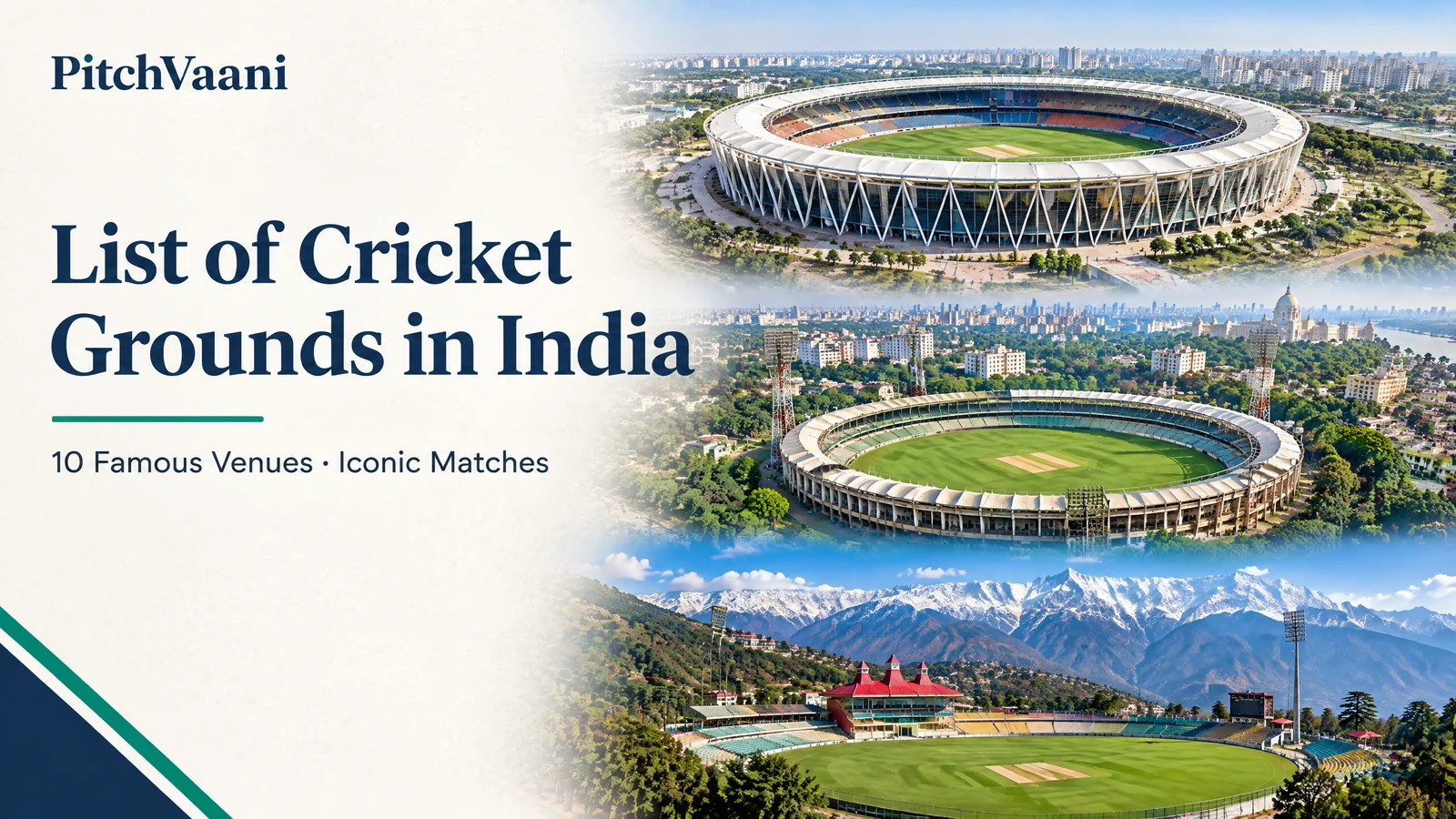
India’s cricket landscape is far bigger than its international stadiums. This list of cricket grounds in India introduces ten famous venues across ten cities, from Ahmedabad and Kolkata to Chennai, Hyderabad and Dharamshala. It also explains the iconic match or milestone that gives each stadium a distinct place in cricket history.
Some grounds are remembered for World Cup finals. Others entered cricket history through a rare Test result, an unforgettable innings or a bowling performance that seemed almost impossible. This PitchVaani guide brings together ten famous and significant venues, the cities and states they belong to, and the matches that explain why supporters still talk about them.
Editorial note: This is a curated selection of ten significant venues, not an official ranking or a complete count of every cricket ground in the country. Explore PitchVaani’s cricket grounds by state for a wider directory.
List of Cricket Grounds in India by City and State
| No. | Cricket ground | City | State or territory | Match or milestone highlighted |
|---|---|---|---|---|
| 1 | Narendra Modi Stadium | Ahmedabad | Gujarat | 2023 ICC Men’s Cricket World Cup final |
| 2 | Eden Gardens | Kolkata | West Bengal | India’s 2001 follow-on Test victory over Australia |
| 3 | Wankhede Stadium | Mumbai | Maharashtra | India’s 2011 World Cup final victory |
| 4 | Arun Jaitley Stadium | New Delhi | National Capital Territory of Delhi | Anil Kumble’s 10/74 against Pakistan in 1999 |
| 5 | M. A. Chidambaram Stadium | Chennai | Tamil Nadu | India’s first Test win in 1952 |
| 6 | M. Chinnaswamy Stadium | Bengaluru | Karnataka | Ireland’s 2011 World Cup chase against England |
| 7 | Rajiv Gandhi International Cricket Stadium | Hyderabad | Telangana | Pakistan’s 345-run World Cup chase in 2023 |
| 8 | HPCA Stadium | Dharamshala | Himachal Pradesh | India’s 2023 World Cup win over New Zealand |
| 9 | Bharat Ratna Shri Atal Bihari Vajpayee Ekana Cricket Stadium | Lucknow | Uttar Pradesh | India’s 100-run World Cup win over England in 2023 |
| 10 | Sawai Mansingh Stadium | Jaipur | Rajasthan | MS Dhoni’s unbeaten 183 against Sri Lanka in 2005 |
The table is designed as a quick reference rather than a popularity chart. Each ground has hosted many important games, but one carefully verified match or milestone has been selected to show what makes the venue memorable.
Famous Cricket Stadiums in India and Their Iconic Matches
1. Narendra Modi Stadium, Ahmedabad
The Narendra Modi Stadium begins this selection with scale. Located in Motera, Ahmedabad, the rebuilt venue has an estimated seating capacity of around 132,000 and is described by the International Cricket Council as the world’s largest cricket stadium. The present arena was created through a complete rebuild of the older Motera venue between 2015 and 2020.
Its defining match so far was the ICC Men’s Cricket World Cup final on 19 November 2023. India entered the final unbeaten but were dismissed for 240. Australia slipped to 47/3 before Travis Head’s 137 and Marnus Labuschagne’s unbeaten 58 carried the visitors to 241/4 and a six-wicket victory.
The site also has an older cricket landmark. Sunil Gavaskar became the first batter to reach 10,000 Test runs at the pre-rebuild Gujarat Stadium in Motera in March 1987. That milestone belongs to the same cricket site, but not to the present stadium structure or its current name.
2. Eden Gardens, Kolkata
Established in 1864, Eden Gardens is one of the historic centres of Indian cricket. Its story spans colonial-era Kolkata, major international series and global tournaments, including the 1987 World Cup final.
The match most closely associated with the ground is India’s Test against Australia from 11 to 15 March 2001. After making only 171 and being asked to follow on, India transformed the contest through VVS Laxman’s 281 and Rahul Dravid’s 180. Their 376-run partnership helped India declare at 657/7 before Harbhajan Singh completed a decisive bowling performance. India won by 171 runs.
Eden Gardens is remembered not simply because a great match happened there, but because the match changed direction so dramatically. A game that appeared lost became one of India’s most celebrated Test victories.
3. Wankhede Stadium, Mumbai
Opened in 1974 and named after cricket administrator S. K. Wankhede, Wankhede Stadium sits close to Mumbai’s western shoreline. It has hosted Tests, one-day internationals, Twenty20 internationals and Indian Premier League matches, but one night remains central to its identity.
On 2 April 2011, Sri Lanka made 274/6 in the World Cup final, led by Mahela Jayawardene’s unbeaten 103. India lost Virender Sehwag and Sachin Tendulkar early, but Gautam Gambhir’s 97 steadied the chase. MS Dhoni then finished unbeaten on 91 as India reached 277/4 and won by six wickets with ten balls remaining.
Wankhede later staged Tendulkar’s 200th and final Test in November 2013. Together, those occasions connect the stadium to a national triumph and an intensely personal farewell for Mumbai cricket supporters.
4. Arun Jaitley Stadium, New Delhi
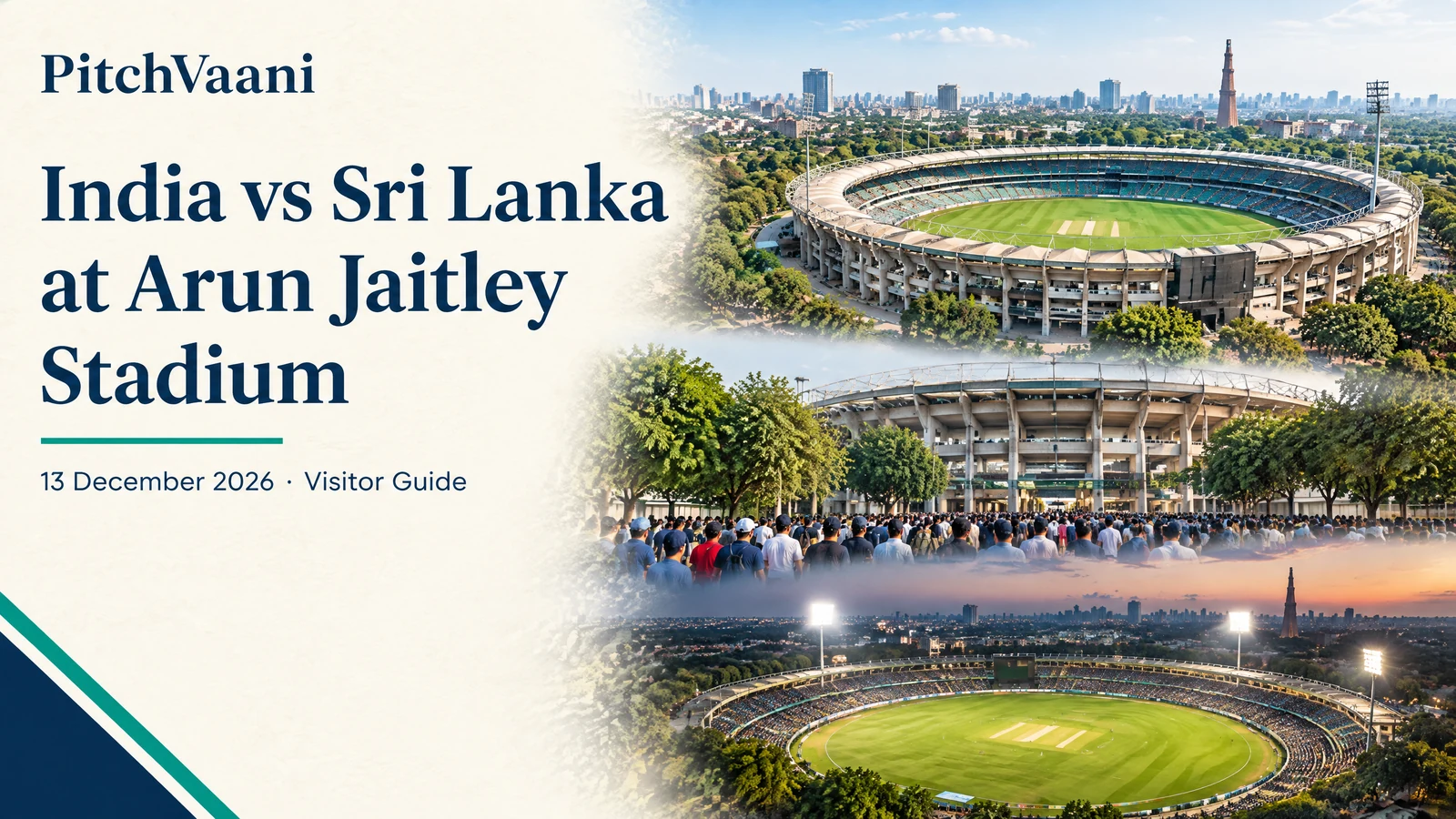
Arun Jaitley Stadium was known for generations as Feroz Shah Kotla. Its long international history includes World Cup matches, major Test performances and records that belong to individual players as much as to the ground itself. PitchVaani’s guide to cricket stadiums and grounds in Delhi places it within the capital’s wider venue network.
Its most extraordinary performance came on 7 February 1999. Defending a target of 420 against Pakistan, Anil Kumble took every wicket in the visitors’ second innings and finished with 10/74. India won by 212 runs, and Kumble became only the second bowler in Test history at that time to take all ten wickets in an innings.
The ground produced another landmark in December 2005, when Sachin Tendulkar scored 109 against Sri Lanka to register his 35th Test century. That innings took him past Sunil Gavaskar’s then-record of 34 Test hundreds.
5. M. A. Chidambaram Stadium, Chennai
Commonly known as Chepauk, M. A. Chidambaram Stadium is one of India’s longest-serving international venues. Established in 1916, it is closely connected with Tamil Nadu cricket and Chennai Super Kings, while older scorecards often identify the city as Madras.
Chepauk gave India its first Test victory. From 6 to 10 February 1952, India defeated England by an innings and eight runs. Pankaj Roy scored 111, Polly Umrigar made an unbeaten 130 and Vinoo Mankad took 8/55 in England’s first innings before adding four more wickets in the second.
The venue was also the setting for the 1986 India–Australia Test, which ended level and became only the second tied Test in the history of the format. Few grounds can connect India’s first Test win with one of the rarest results in international cricket.
6. M. Chinnaswamy Stadium, Bengaluru
M. Chinnaswamy Stadium is located in central Bengaluru and was initially known as the KSCA Stadium. Its relatively compact setting has contributed to many high-scoring limited-overs matches, but its history also includes World Cup drama and major Test occasions.
On 2 March 2011, England made 327/8 against Ireland in a World Cup group match. Ireland were 111/5 during the chase when Kevin O’Brien produced one of the tournament’s great counterattacks. He reached his hundred in 50 balls and finished with 113 from 63 deliveries. Ireland completed the chase at 329/7 with five balls remaining.
The result remains one of cricket’s most famous World Cup upsets. It also shows why a ground should be remembered for the contest it produced, not only for the home team that normally plays there.
7. Rajiv Gandhi International Cricket Stadium, Hyderabad
Located in Uppal, the Rajiv Gandhi International Cricket Stadium became Hyderabad’s principal international venue in the mid-2000s. The Hyderabad Cricket Association records that it was initially called Visaka International Cricket Stadium before receiving its current name.
A remarkable World Cup chase unfolded here on 10 October 2023. Sri Lanka made 344/9 through centuries from Kusal Mendis and Sadeera Samarawickrama. Pakistan then recovered from 37/2 as Abdullah Shafique scored 113 and Mohammad Rizwan made an unbeaten 131. Pakistan reached 345/4 in 48.2 overs and won by six wickets.
Four centuries across one match made the evening memorable, but the calm of Pakistan’s chase after two early wickets gave the contest its shape.
8. HPCA Stadium, Dharamshala
The HPCA Stadium is instantly recognisable for its setting beneath the Dhauladhar mountain range. Its surroundings attract attention, but the ground has also developed a meaningful international record of its own.
On 22 October 2023, India met an unbeaten New Zealand side in the World Cup. Mohammed Shami took 5/54 as New Zealand were dismissed for 273. Virat Kohli then made 95 and Ravindra Jadeja finished unbeaten on 39 as India reached 274/6 and won by four wickets.
The stadium added another global milestone in March 2024, when James Anderson dismissed Kuldeep Yadav to become the first fast bowler to take 700 Test wickets. The mountain view may define the photographs, but the cricket has given Dharamshala its lasting relevance.
9. Bharat Ratna Shri Atal Bihari Vajpayee Ekana Cricket Stadium, Lucknow
Commonly shortened to Ekana Cricket Stadium, this Lucknow venue represents the newer generation of major grounds in India. Its full official name is Bharat Ratna Shri Atal Bihari Vajpayee Ekana Cricket Stadium, and it has hosted international cricket as well as Indian Premier League matches.
Its most significant global tournament moment came on 29 October 2023. India made 229/9 against England on a demanding surface, with Rohit Sharma holding the innings together through 87. Mohammed Shami then took 4/22 and Jasprit Bumrah 3/32 as England were bowled out for 129. India won by 100 runs.
The match stood out because India defended a total that looked vulnerable at the halfway stage. It gave Ekana a World Cup story built around control, movement and fast bowling rather than a huge score.
10. Sawai Mansingh Stadium, Jaipur
Sawai Mansingh Stadium, also known as SMS Stadium, is Jaipur’s best-known international cricket venue. Its place in modern Indian cricket is closely tied to one of MS Dhoni’s most powerful one-day innings.
On 31 October 2005, Sri Lanka posted 298/4, with Kumar Sangakkara making an unbeaten 138. After India lost Sachin Tendulkar in the opening over, Dhoni was promoted to number three. He responded with 183 not out from 145 balls, hitting 15 fours and 10 sixes. India reached 303/4 in 46.1 overs and won by six wickets.
The innings accelerated Dhoni’s rise from an exciting newcomer to one of India’s defining limited-overs players. For many supporters, Jaipur and 183 not out remain inseparable.
Beyond India’s Major International Stadiums
A national ground guide should not stop with televised venues. India’s cricket system also depends on domestic grounds, institutional grounds, academy facilities, university fields and village or community venues. They may not host World Cup matches, but they are where many players train, compete and build a relationship with the game.
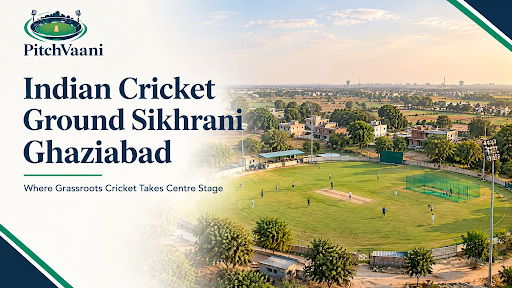
Indian Cricket Ground Sikhrani in Ghaziabad is one example of the wider story PitchVaani documents. Including such venues alongside major stadiums helps show how Indian cricket connects global events with local participation.
What This List of Cricket Grounds in India Reveals
This list of cricket grounds in India covers venues from different eras and regions. Eden Gardens and Chepauk carry more than a century of history. Wankhede and Arun Jaitley Stadium are closely connected with defining Indian performances. Narendra Modi Stadium and Ekana represent a newer generation of large, modern venues. Dharamshala shows how geography can become part of a ground’s identity.
The unifying factor is not size. It is memory. A stadium becomes iconic when a match, an innings or a spell of bowling gives supporters a reason to remember exactly where it happened. Readers can continue with PitchVaani’s collections of international cricket grounds in India and historic cricket grounds.
Frequently Asked Questions
Which are 10 famous cricket grounds in India?
The ten venues covered here are Narendra Modi Stadium, Eden Gardens, Wankhede Stadium, Arun Jaitley Stadium, M. A. Chidambaram Stadium, M. Chinnaswamy Stadium, Rajiv Gandhi International Cricket Stadium, HPCA Stadium, Ekana Cricket Stadium and Sawai Mansingh Stadium. This is a curated selection rather than an official popularity ranking.
Which is the largest cricket stadium in India?
Narendra Modi Stadium in Ahmedabad is the largest cricket stadium in India by stated seating capacity. The International Cricket Council lists its capacity at around 132,000.
Which is the oldest ground in this article?
Eden Gardens is the oldest venue in this curated selection, with the International Cricket Council dating its establishment to 1864. M. A. Chidambaram Stadium at Chepauk was established in 1916.
How many cricket grounds are there in India?
There is no single permanent number that captures every international, first-class, domestic, institutional, academy and community ground in India. The total also changes as venues open, close or are redeveloped. This article therefore presents ten significant venues rather than claiming to be a national census.
Does every ground in this guide host international cricket?
Yes. Each of the ten venues in the main table has hosted men’s international cricket. The wider PitchVaani directory also documents domestic, historic and community grounds that serve different levels of the game.
Where can I find cricket grounds by state or city?
Use PitchVaani’s directories for cricket grounds by state and cricket grounds by city. Individual venue guides provide history, quick facts, match records and visitor information where available.