
The oldest cricket stadiums in India cannot be ranked honestly by one unlabeled year. Eden Gardens is linked to 1864, but its first Test came 70 years later. Chinnaswamy has a 1969 foundation date and a 1974 stadium date. The present Narendra Modi Stadium opened in 2021, even though the Motera venue lineage begins in 1982. This guide keeps those clocks separate.
The ranking covers ten major Indian stadium venues that remain current or recently active in senior international cricket. It ranks the earliest defensible establishment, construction or venue-lineage date, then shows the first senior international and what happened to the original structure. Older private, superseded and domestic-only grounds are discussed separately rather than hidden.
A venue qualifies if it still operates as a cricket ground, has hosted a senior men’s or women’s international and belongs to the current or recently active major-stadium class. The year beside each venue is labelled as establishment, foundation, opening or lineage. A full rebuild does not become an untouched old building simply because it occupies the same cricket site.
Scope checked to 29 September 2026 · Same-year venues use sequential list numbers without implying a one-year age differenceOldest Cricket Stadiums in India at a Glance
| Rank | Stadium | Date used | First international | Gap | Structure status |
|---|---|---|---|---|---|
| 01 | Eden Gardens | 1864 | Test · India v England · 5 January 1934 | 70 years | Long-running site with repeated modernisation |
| 02 | Arun Jaitley Stadium (Feroz Shah Kotla) | 1883 | Test · India v West Indies · 10 November 1948 | 65 years | Historic ground retained through renovations and renaming |
| 03 | M. A. Chidambaram Stadium (Chepauk) | 1916 | Test · India v England · 10 February 1934 | 18 years | Continuous venue with major later redevelopment |
| 04 | Brabourne Stadium | 1937 | Test · India v West Indies · 9 December 1948 | 11 years | Continuing Cricket Club of India venue |
| 05 | Green Park | 1945 | Test · India v England · 12 January 1952 | 7 years | Old venue with frequent stand and facility changes |
| 06 | Barabati Stadium | 1958 | ODI · India v England · 27 January 1982 | 24 years | Long-used regional venue, repeatedly upgraded |
| 07 | M. Chinnaswamy Stadium | 1969 foundation | Test · India v West Indies · 22 November 1974 | 5 years from foundation | Completed stadium dated to 1974 by KSCA |
| 08 | Sawai Mansingh Stadium | 1969 | ODI · India v Pakistan · 2 October 1983 | 14 years | Concrete bowl later transformed by major renovation |
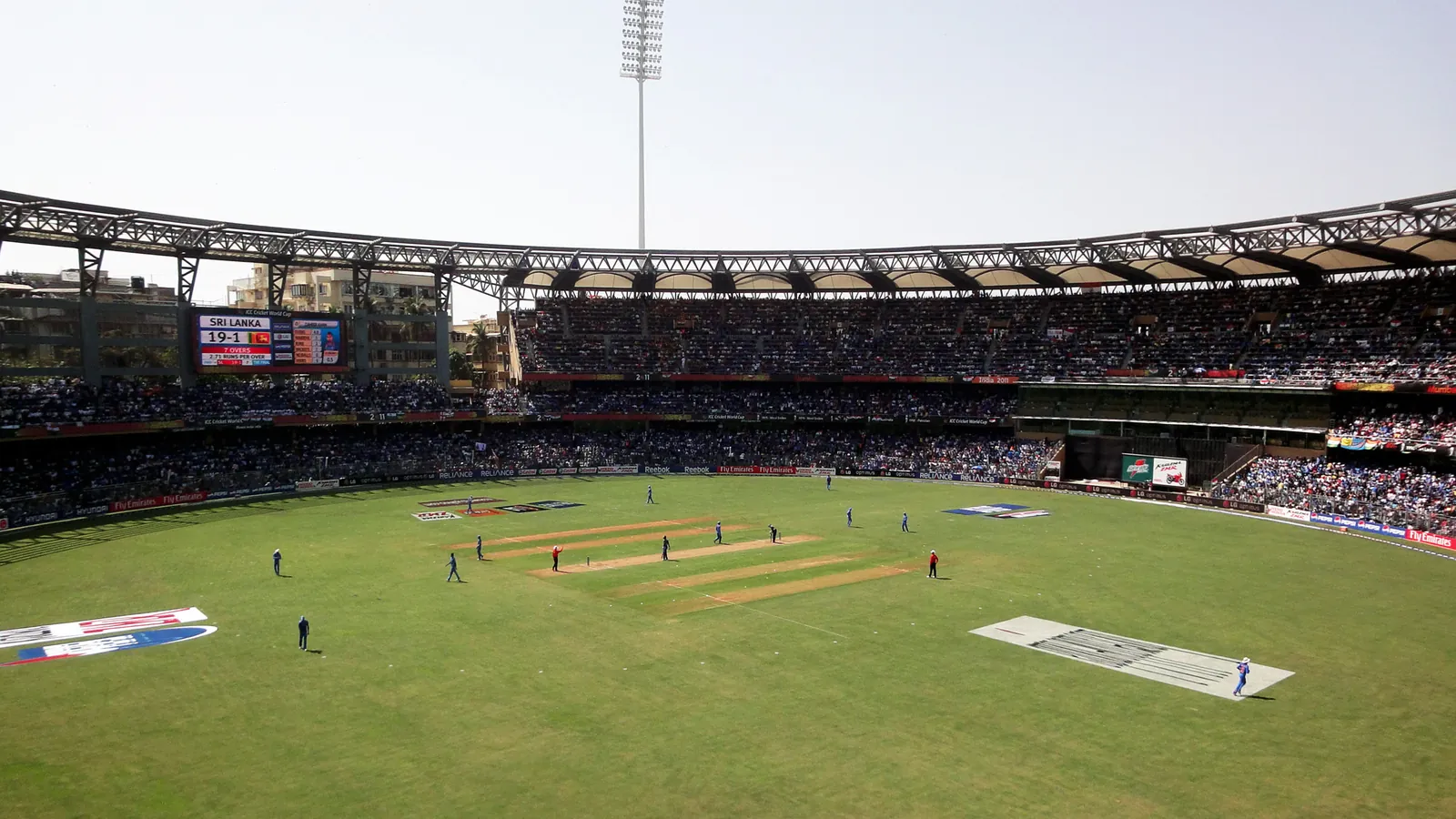
| 09 | Wankhede Stadium | 1974 | Test · India v West Indies · 23 January 1975 | About 1 year | Same venue, extensively redeveloped for 2011 |
| 10 | Narendra Modi Stadium (Motera lineage) | 1982 lineage | Test · India v West Indies · 12 November 1983 | About 1 year | Old stadium demolished in 2016; new structure opened 2021 |
Three Age Clocks Prevent a Misleading List
This can be an establishment, opening, construction or foundation date. The label matters because those events are not interchangeable.
The first Test, ODI or T20I may come years later. That delay shows how local grounds became national venues.
Some grounds evolved through renovation. Motera is different: the old stadium was demolished and replaced.
The Ten Stadiums—and Why Each One Counts as Old
Eden Gardens
Kolkata, West BengalEden Gardens leads because 1864 is the strongest widely accepted establishment date among the major Indian stadium venues in this scope. Its first Test arrived in January 1934, creating a 70-year gap between venue age and international age. That gap matters: the ground is nineteenth-century, but the current stands are not being presented as untouched 1864 architecture.
- Age basis
- Established venue
- First international
- Test · India v England · 5 January 1934
- Age gap
- 70 years
- How to reach
- Use Esplanade Metro Station, then continue by a 1.5–2 km walk or short local ride. Route guide
The Delhi ground’s 1883 date places it second under a venue-lineage method. It waited 65 years for its first Test, against West Indies in November 1948. The former name came from the neighbouring Feroz Shah Kotla fort; the stadium was renamed for former Delhi cricket administrator Arun Jaitley in 2019.
- Age basis
- Established ground
- First international
- Test · India v West Indies · 10 November 1948
- Age gap
- 65 years
- How to reach
- Delhi Gate Metro Station on the Violet Line is the closest practical stop; walk onward to the gate printed on the ticket. Route guide
M. A. Chidambaram Stadium (Chepauk)
Chennai, Tamil NaduChepauk was established in 1916 and hosted its first Test in February 1934. The venue then became part of India’s cricketing identity: India earned its first Test victory there in 1952, and the 1986 India–Australia match became only the second tied Test in cricket history.
- Age basis
- Established stadium
- First international
- Test · India v England · 10 February 1934
- Age gap
- 18 years
- How to reach
- Use Government Estate Metro Station, then take a short local ride or any match-day feeder service to Chepauk.
Brabourne Stadium
Mumbai, MaharashtraBrabourne’s date is unusually precise. The Cricket Club of India says it was officially inaugurated on 7 December 1937 with CCI playing Lord Tennyson’s XI. It stands on reclaimed land beside the Arabian Sea and hosted its first Test eleven years later.
- Age basis
- Official inauguration · 7 December 1937
- First international
- Test · India v West Indies · 9 December 1948
- Age gap
- 11 years
- How to reach
- Travel to Churchgate by suburban rail or Metro Line 3, then complete the final stretch to the CCI entrance on foot.
Green Park
Kanpur, Uttar PradeshGreen Park was established in 1945 and became a Test venue seven years later. Its place in this ranking comes from that early post-war origin, not from the age of every present stand. ESPNcricinfo explicitly notes that the ground has seen frequent changes.
- Age basis
- Established ground
- First international
- Test · India v England · 12 January 1952
- Age gap
- 7 years
- How to reach
- From Kanpur Central railway station, take an auto-rickshaw, taxi or city bus to Green Park in Civil Lines.
Barabati Stadium
Cuttack, OdishaBarabati is commonly dated to 1958, although the official Odisha Cricket Association history available for this review does not publish that year. The article therefore keeps the date but labels it lower-confidence. Its first senior international arrived in January 1982, when India beat England in what BCCI describes as only the third ODI played in India.
- Age basis
- Commonly cited opening year
- First international
- ODI · India v England · 27 January 1982
- Age gap
- 24 years
- How to reach
- From Cuttack railway station, use a city bus or taxi for the roughly 4 km onward trip to Stadium Road.
M. Chinnaswamy Stadium
Bengaluru, KarnatakaChinnaswamy demonstrates why a single ‘established’ column can mislead. The foundation stone was laid in May 1969, the first Ranji Trophy match came in December 1972, and the first Test arrived in November 1974. Karnataka State Cricket Association’s own history describes the stadium as built in 1974.
- Age basis
- Foundation laid · 18 May 1969
- First international
- Test · India v West Indies · 22 November 1974
- Age gap
- 5 years from foundation
- How to reach
- Take Bengaluru’s Purple Line to Cubbon Park Metro Station, then walk to the stadium entrance on Cubbon Road. Route guide
Sawai Mansingh Stadium
Jaipur, RajasthanSawai Mansingh Stadium is also commonly dated to 1969. It is numbered eighth only to keep this ten-item list sequential; that does not claim it is one year younger than Chinnaswamy. Jaipur’s international debut came with an India–Pakistan ODI in 1983. Its first and only Test followed in February 1987.
- Age basis
- Commonly cited build year
- First international
- ODI · India v Pakistan · 2 October 1983
- Age gap
- 14 years
- How to reach
- From Jaipur Junction, take a city bus towards Lal Kothi or use a taxi or auto-rickshaw for the final journey.
Wankhede Stadium
Mumbai, MaharashtraWankhede was built in 1974 after the Bombay Cricket Association wanted greater control than it had at Brabourne. Mumbai Cricket Association says the stadium was completed in just 11 months and 23 days. Its first Test began on 23 January 1975, despite some retrospective accounts loosely calling it a 1974 Test.
- Age basis
- Built and opened
- First international
- Test · India v West Indies · 23 January 1975
- Age gap
- About 1 year
- How to reach
- Use Churchgate suburban railway station or Churchgate Metro, then walk to the ticketed gate. Route guide
Narendra Modi Stadium (Motera lineage)
Ahmedabad, GujaratThe original Motera stadium dates to 1982 and hosted its first Test in November 1983. That history includes Sunil Gavaskar reaching 10,000 Test runs and Kapil Dev passing Richard Hadlee’s Test-wicket record. The current building, however, is not the 1982 stadium.
- Age basis
- Original Motera venue established
- First international
- Test · India v West Indies · 12 November 1983
- Age gap
- About 1 year
- How to reach
- Motera Stadium Metro Station is the closest rapid-transit stop; Sabarmati Railway Station is the main rail alternative. Route guide
Four Things the Timeline Shows
Eden and Kotla existed for 70 and 65 years before their first Tests. A stadium can be historically old without having an equally long international record.
Feroz Shah Kotla became Arun Jaitley Stadium in 2019. Motera also carried several names. Name changes affect identity, not the earlier cricket timeline.
Wankhede and several older venues were heavily modernised. Motera’s old building was demolished, so its venue lineage and current structure need separate dates.
Brabourne grew from a private club. Wankhede grew from an association dispute. Chinnaswamy depended on administrators, public effort and difficult site preparation.
The PitchVaani Perspective
A useful oldest cricket stadiums in India article should not reward the neatest date; it should reward the most honest explanation. The genuinely interesting story is the gap between local beginnings and international arrival, followed by the physical changes needed to keep an old venue alive. Eden’s 70-year wait, Brabourne creating the conditions for Wankhede, and Motera’s complete replacement reveal more than a copied establishment-year chart.
How these dates were verified
PitchVaani compared current BCCI and ICC venue material, stadium-association histories and dated match scorecards. Lower-confidence years are labelled in the article. Establishment, foundation, inauguration, first international and current-building dates were not treated as synonyms.
Frequently Asked Questions
Which is the oldest cricket stadium in India?
By establishment date, Eden Gardens is the oldest international cricket stadium in India within this current or recently active major-venue scope. Its accepted venue date is 1864, but the current stands are not claimed to be original 1864 structures.
Which is the first cricket stadium in India?
There is no universally precise answer unless ‘first’ is defined. Eden Gardens is the oldest major stadium venue in this ranking. Bombay Gymkhana is a different answer to a different question: it hosted India’s first home Test in 1933 but is a private historic ground outside this stadium scope.
Which is the second oldest cricket stadium in India?
The ranking applies venue-establishment dates consistently: Feroz Shah Kotla is dated to 1883 and Chepauk to 1916. ICC also calls Chepauk India’s second-oldest stadium, which reflects how different sources classify an old ground, stadium and present structure.
Why is Bombay Gymkhana not in the top ten?
Bombay Gymkhana is older and hosted India’s first home Test in 1933, but it is a private historic multi-sport ground rather than a comparable current major senior-international stadium. It is excluded by scope, not by historical importance.
Why is VCA Civil Lines not in the top ten?
VCA Civil Lines has cricket-club lineage from 1906, but Nagpur’s senior internationals moved to Jamtha. Civil Lines now serves coaching and first-class cricket, so it is discussed as a historic ground rather than ranked as a current major stadium. Browse PitchVaani’s Maharashtra cricket grounds for the state context.
Why is Keenan Stadium not in the top ten?
Keenan Stadium was built in 1939 and staged international cricket, but it is no longer a current major senior-international venue. PitchVaani therefore keeps it outside this active-stadium ranking while retaining it in the history of cricket grounds in Jharkhand.
Why is Lal Bahadur Shastri Stadium not in the top ten?
Lal Bahadur Shastri Stadium is historically important, but Hyderabad’s internationals moved to Rajiv Gandhi International Cricket Stadium in 2005. It is therefore treated as a superseded historic venue rather than a current major stadium.
Is today’s Narendra Modi Stadium really from 1982?
No. The Motera venue lineage begins in 1982, but the old stadium was demolished in 2016 and the current structure was inaugurated in 2021. Both dates are required for an honest age claim.
Should M. Chinnaswamy Stadium be dated 1969 or 1974?
Use 1969 for the foundation stone and 1974 for the completed stadium and first Test. A good history page labels both instead of presenting either date without context.
Does oldest mean continuously unchanged?
No. Stadiums renovate stands, pitches, roofs, drainage, lights and spectator facilities. Venue age normally tracks continuity of place and cricket use, while the surviving-structure note explains how much of the physical stadium is newer.
What do the oldest cricket stadiums in India reveal beyond dates?
They reveal three different histories at once: when a ground began, when international cricket arrived and whether the present structure survives from that era. The gaps explain why a stadium can be old without having hosted internationals for all of that time.